Its application are still limited because its theory is still a mystery to be solved. But the applications available are amazing and beautiful. Some of them are listed below.
Sensing
Quantum superposition states can be very sensitive to a number of external effects, such as electric, magnetic and gravitational fields; rotation, acceleration and time, and therefore can be used to make very accurate sensors. There are many experimental demonstrations of quantum sensing devices, such as the experiments carried out by the Nobel laureate William D. Phillips on using cold atom interferometer systems to measure gravity and the atomic clock which is used by many national standards agencies around the world to define the second.
Recent efforts are being made to engineer quantum sensing devices, so that they are cheaper, easier to use, more portable, lighter and consume less power. It is believed that if these efforts are successful, it will lead to multiple commercial markets, such as for the monitoring of oil and gas deposits, or in construction.
Secure communications
Quantum secure communication are methods which are expected to be ‘quantum safe’ in the advent of a quantum computing systems that could break current cryptography systems. One significant component of a quantum secure communication systems is expected to be Quantum key distribution, or ‘QKD’: a method of transmitting information using entangled light in a way that makes any interception of the transmission obvious to the user. Another technology in this field is the quantum random number generator used to protect data. This produces truly random number without following the procedure of the computing algorithms that merely imitate randomness.
Computation
Quantum computation is among the most far-reaching and challenging of quantum technologies. Based on quantum bits that can be zero and one at the same time and instantaneous correlations across the device, a quantum computer acts as a massive parallel device with an exponentially large number of computations taking place at the same time. There already exist many algorithms that take advantage of this power and that will allow us to address problems that even the most powerful classical supercomputers would never solve.

Quantum computers using different platforms have been demonstrated over the last two decades. The most advanced are based on trapped ions and superconducting circuits, where small prototypes for up to
10-15 quantum bits have already run basic algorithms and protocols.
Many platforms and architectures have demonstrated the basic principles of quantum computing based on solid-state systems (electron spins in semiconductors, nuclear spins in solids, Majorana zero modes) and on atomic and optical systems (nuclear spins in molecules, hyperfine and Rydberg states in atoms and photons, to name but a few).
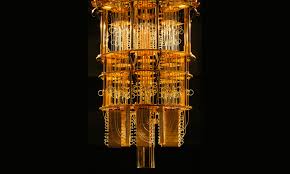
Due to technological interest and the evident limitations of existing approaches, referred to as the “end of Moore’s Law” of computational scaling, global IT companies have been taking an increased interest in quantum computing in the last decade. Advances in quantum computer design, fault-tolerant algorithms and new fabrication technologies are now transforming this “holy-grail” technology into a realistic programme poised to surpass classical computation by ten to twenty years in some applications. With these new developments, the question companies are asking is not whether there will be a quantum computer, but who will build and profit from it. Intel, HRL Laboratories and NTT, for example, are supporting spin qubits in semiconductors; Google, IBM and Intel are investing in superconducting qubits; D-Wave is producing a superconducting quantum annealer; Microsoft is betting on topological quantum bits; and Lockheed Martin and INFINEON are supporting research with trapped ions and their interface with photons.
With world-leading research in quantum computing located in Europe, many IT companies have chosen academic partners in Europe for their R&D efforts.Realising quantum computing capability in Europe on a decade-long timescale will require synergy between industrial and academic partners, as well as involvement of engineers from institutes like Fraunhofer, IMEC, VTT and LETI in multidisciplinary consortia. The hardware efforts have to be complemented by the development of quantum software to obtain optimised quantum algorithms able to solve application problems of interest. Europe is a leader in the development of software for classical high-performance computing applications and so is well placed to establish the emerging field of quantum software engineering, with a number of leading quantum software groups already active and interacting with hardware teams.
Space Applications
Space-based tests of fundamental physics have a long history, from early tests of general relativity to more recent missions such as gravity probe B and proposed missions to test the equivalence principle (STE-QUEST) and gravitational decoherence (MAQRO). These more recent proposals make extensive use of quantum technologies, from atomic clocks to weak force sensors. Deploying any technology into space pushes specifications to the limit and this will be especially true for quantum-enabled technologies. Recent advances in space technology as developed for experiments such as LISA and LISA Pathfinder have allowed researchers to optimally harness the space environment for quantum experiments.
This thematic series is dedicated to all aspects of space-based quantum technologies from fundamental physics to quantum communication protocols including proposals for new space-based quantum experiments as well as terrestrial experimental tests of new quantum technologies for space deployment.
 Tech Geeks